
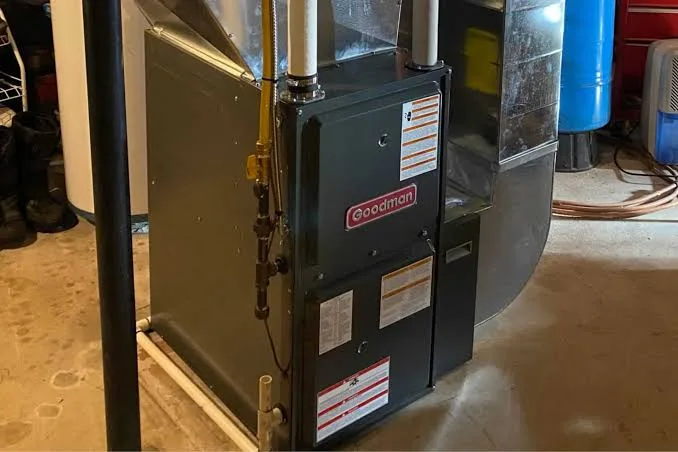
Being told that a furnace should be replaced can turn a repair call into a much bigger decision very quickly. The difficult part is that there is no single rule that tells every homeowner when repair stops making sense.
An older furnace can still have a straightforward, reasonable repair. A newer furnace can have a serious problem that deserves a closer look. Age, repair cost, condition, safety, parts availability, comfort, and the history of the system all belong in the conversation.
The better question is not simply, “How old is the furnace?” It is, “What actually failed, and what does that failure mean for the rest of the system?”
Summary
- A furnace does not need to be replaced just because it is older.
- Start with the actual diagnosis: what failed, why it failed, and whether the repair is safe and reasonable.
- Repair can make sense when the problem is isolated and the rest of the furnace is in workable condition.
- Replacement becomes more reasonable when problems are repeated, safety is involved, major parts are unavailable, or the overall condition of the furnace no longer supports another repair.
- Simple rules based only on age or a fixed repair-cost percentage can miss the real condition of the equipment.
- If a large replacement recommendation is unclear, getting a second opinion before deciding is reasonable.
Start With the Failure, Not the Age of the Furnace
Furnace age gives useful context, but it does not diagnose anything.
Suppose an older furnace stops working because of a failed igniter or another replaceable component. If the technician finds that the rest of the system is operating reasonably, a repair may still be the practical choice.
Now consider a furnace that has had several recent failures, has a serious heat-exchanger concern, or needs a major component that is difficult to obtain. In that situation, putting more money into the same equipment may be harder to justify.
The age of the furnace changes how those facts are weighed. It should not replace the facts.
When Can Furnace Repair Make Sense?
Repair is usually worth a serious look when the problem is reasonably isolated and fixing it gets the furnace back to safe, dependable operation without ignoring a larger problem.
Depending on the equipment and diagnosis, that could involve a control, sensor, ignition component, motor, switch, electrical component, or another replaceable part. The presence of a failed part does not automatically mean the whole furnace has reached the end of its useful life.
A repair may also make more sense when:
- the furnace has otherwise been operating reliably
- the problem is the first meaningful failure in a long time
- the required part is available
- there are no major safety concerns
- the furnace still heats the home properly when it is operating
- the repair cost is reasonable for the condition of the system
If your furnace is not working at all, Paladin’s no-heat troubleshooting checklist also covers a few basic things homeowners can check before assuming the furnace itself has failed.
When Does Replacement Start to Make More Sense?
Replacement becomes a more serious option when the current repair is only one part of a larger pattern.
For example, repeated breakdowns can change the calculation. One repair might be perfectly reasonable. Several repairs close together can show that the homeowner is no longer deciding whether to fix one component, but whether to keep investing in a system that is becoming less dependable.
Replacement may deserve a closer look when there are:
- repeated or increasingly expensive failures
- significant safety concerns
- major deterioration or damage
- parts that are obsolete or difficult to source
- multiple known problems at the same time
- persistent comfort or performance problems that are tied to the furnace itself
- a major repair on a furnace whose overall condition is already poor
None of those points creates an automatic replacement rule. Together, they can make another repair less attractive.
Be Careful With the “Repair Cost Percentage” Rule
Homeowners sometimes hear rules such as, “If the repair costs more than a certain percentage of a new furnace, replace it.”
That can be a rough way to frame the decision, but it is too simple to use by itself.
A relatively expensive repair on a furnace that is otherwise in strong condition may still be reasonable. A smaller repair on equipment with several other developing problems may not be.
The dollars matter. So does what those dollars are buying.
If the repair restores a system that is otherwise sound, that is different from spending money to get through one more season while several other components are already causing concern.
Look at the Repair History, Not Just Today’s Quote
A furnace has a history. That history can tell you more than one repair estimate.
If the system has needed very little work and one component fails, there may be no reason to treat that failure as proof that replacement is necessary.
If the homeowner can point to several recent service calls, intermittent issues, recurring lockouts, unusual noises, repeated component failures, or increasing difficulty maintaining comfort, today’s repair is part of a bigger picture.
It helps to ask the technician a direct question: If this repair is completed, is there another known issue that is likely to affect the system soon?
No one can predict every future failure. A technician should still be able to explain what is visible today and whether the rest of the furnace appears consistent with making the repair.
Safety Can Change the Decision
Some furnace problems are primarily about comfort. Others involve combustion, venting, gas, electrical faults, or other safety-related conditions.
A safety concern does not automatically mean replacement, because some safety-related problems can be repaired. But it changes the conversation. The furnace should not simply be put back into operation without the cause being properly addressed.
If a carbon monoxide alarm sounds or you smell gas, treat that as a safety issue rather than a repair-versus-replacement exercise. Leave the area when appropriate and contact the gas utility, emergency services, or a qualified professional from a safe location.
Comfort Problems Need the Right Diagnosis Too
Homeowners sometimes consider replacing a furnace because parts of the house are too hot, too cold, or difficult to keep comfortable.
A new furnace will not necessarily fix a ductwork problem, airflow restriction, thermostat issue, poor system balance, or another problem outside the furnace itself.
If comfort is part of the reason for considering replacement, the diagnosis should explain whether the furnace is actually causing the problem. Otherwise, it is possible to replace the most expensive piece of equipment in the system and keep the original comfort problem.
What About Efficiency?
A newer furnace may operate differently and may offer efficiency advantages compared with older equipment, but projected savings should not be treated as guaranteed payback.
Actual operating costs depend on the house, weather, thermostat settings, fuel prices, equipment sizing, ductwork, how the system is used, and the condition of the rest of the HVAC system.
Efficiency can support a replacement decision. It is usually a stronger argument when it is combined with other reasons such as poor reliability, major repair needs, or a system that no longer fits the home well.
A Replacement Recommendation Should Come With an Explanation
If a technician recommends replacing a furnace, the homeowner should be able to understand why.
A useful explanation should identify what failed, whether it can be repaired, what the repair would involve, what other condition concerns exist, and why replacement is being recommended instead.
“The furnace is old” is context. It is not a complete diagnosis.
Paladin Mechanical’s furnace repair and installation service is built around diagnosing the equipment first and explaining the available options. If repair is safe and reasonable, it should be part of the discussion. If replacement makes more sense, the reasons should be clear enough that the homeowner can make the decision without pressure.
When Is a Second Opinion Worth Getting?
If you have been given a large repair quote or told that replacement is necessary and the explanation still feels unclear, a second opinion can be useful before committing to a new system.
The purpose is not to assume the first contractor is wrong. It is to have another technician look at the equipment, confirm the condition, and explain whether repair and replacement have both been considered reasonably.
Paladin provides furnace service and second opinions in Smithville, Grimsby, Beamsville, Binbrook, and throughout the surrounding Hamilton-Niagara area.
Key Takeaways
- Furnace age is useful context, but it should not make the repair-versus-replacement decision by itself.
- Start with what actually failed and the condition of the rest of the furnace.
- An isolated repair can still make sense on an older furnace.
- Repeated failures, safety concerns, poor overall condition, and parts availability can make replacement more reasonable.
- Do not rely on one fixed percentage rule to decide whether a repair is “too expensive.”
- Comfort problems should be diagnosed before assuming a new furnace will solve them.
- A replacement recommendation should explain why replacement is being recommended instead of repair.
If you are deciding whether to repair or replace your furnace, contact Paladin Mechanical to request service or a second opinion.