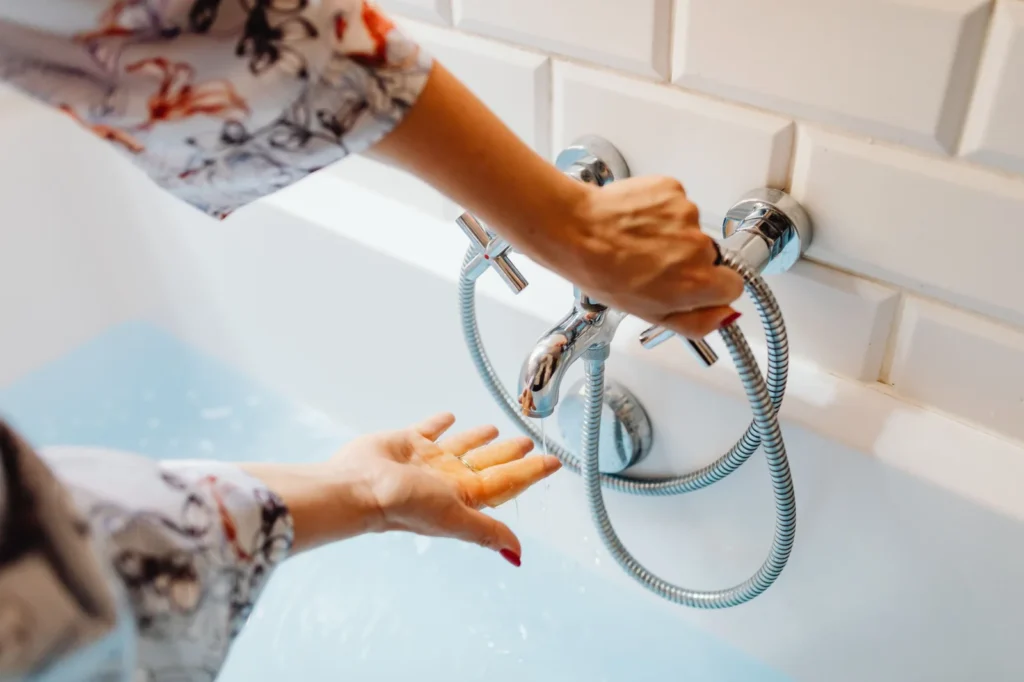
Losing hot water usually gets your attention pretty quickly. A shower suddenly turns cold, the kitchen tap never warms up, or the water starts hot but runs cold much sooner than usual.
Sometimes the problem is simple. Sometimes it means the water heater needs repair. Before assuming the entire unit needs to be replaced, there are a few things worth checking.
Summary
If you have no hot water, start with the basics: make sure the problem affects the whole house, check the thermostat or temperature setting, look for a tripped breaker if you have an electric water heater, and check whether a tankless unit is displaying an error code.
Don’t remove covers, open gas components, bypass safety devices, or start taking the unit apart.
If you smell gas, see active leaking around the tank or piping, notice signs of overheating or burning, or a carbon monoxide alarm goes off, stop troubleshooting and deal with the safety issue first.
If the basic checks don’t explain the problem, a technician can determine whether the water heater needs a repair, maintenance, or replacement.
First, Is There Really No Hot Water?
Before heading to the mechanical room, check another faucet.
If one shower or sink has no hot water but the rest of the house does, the water heater may not be the problem at all. A mixing valve, faucet cartridge, shower valve, or another plumbing component could be affecting that fixture.
If every hot-water tap in the house is cold, then the water heater is a much more likely place to look.
It is also worth paying attention to how the problem started.
Did the hot water disappear completely? Does it get warm but not hot? Does it start hot and quickly turn cold? Those symptoms can point to different problems.
Check the Water Heater’s Temperature Setting
This sounds obvious, but it is worth checking before assuming something has failed.
Someone may have changed the temperature setting, or a tankless unit may have been adjusted accidentally.
If your system has a normal user-facing temperature control, make sure it is set where you expect it to be.
Avoid turning the temperature unusually high in an attempt to fix the problem. Hotter water creates a greater scalding risk and will not repair a failed component.
If You Have an Electric Water Heater, Check the Breaker
Electric water heaters use a significant electrical load, so they normally have a dedicated breaker in the electrical panel.
Check whether that breaker has tripped.
If it has, you can reset it once. If it immediately trips again, or trips repeatedly, leave it off and call for service. A breaker that continues to trip is telling you there is an electrical problem somewhere in the system.
Don’t remove the electrical access panels on the water heater unless you are qualified to work on the equipment. The electrical components behind those covers can operate at dangerous voltages.
If You Have a Gas Water Heater, Don’t Start Taking It Apart
A gas water heater can lose hot water because of an ignition problem, gas-supply issue, venting problem, failed sensor, control problem, or another component fault.
Some newer units have diagnostic lights or a display that can give you useful information without opening anything.
That information can be helpful when you call for service.
But the gas valve, burner, ignition system, venting, and combustion components aren’t good homeowner troubleshooting projects.
If you smell gas, don’t continue trying to diagnose the water heater. Leave the area and contact the gas utility or emergency services from a safe location. Avoid flames, electrical switches, or anything else that could create an ignition source.
Look for Water Around the Tank
A small amount of moisture doesn’t automatically mean the tank itself has failed. Water can come from a fitting, valve, piping connection, drain, or another nearby source.
But a tank that is actively leaking needs attention.
If water appears to be coming through the body of the tank itself, replacement may be more likely than repair because the storage tank is part of the appliance rather than a replaceable external fitting.
The important thing is not to jump straight from “there is water on the floor” to “I need a new water heater.” The source of the leak needs to be identified first.
That is exactly where a proper diagnosis helps.
What If You Have Some Hot Water, Just Not Enough?
Running out of hot water unusually quickly is different from having none at all.
With a conventional tank water heater, possible causes can include a failed heating element, burner or control problem, sediment buildup, temperature-control issue, or simply demand exceeding the capacity of the tank.
If the system worked normally for years and suddenly cannot keep up with the same household demand, there is probably something worth investigating.
If the shortage has always been there, the issue may instead be related to tank capacity, usage patterns, or system design.
A technician should be able to tell you which problem you actually have before recommending a larger or newer unit.
If You Have a Tankless Water Heater, Check the Display
Tankless water heaters can make troubleshooting a little easier because many display an error code when something is wrong.
Write the code down before resetting or powering the system off. That information may help identify what the unit detected.
Simple issues such as an interrupted power supply may be obvious. Other faults can involve ignition, venting, gas supply, water flow, sensors, scaling, or internal components.
Tankless systems also need proper maintenance. Mineral buildup inside the heat exchanger can affect performance over time, especially where water conditions make scaling more likely.
An error code is useful information. It isn’t necessarily permission to start replacing parts yourself.
When Should You Stop Troubleshooting?
There is a difference between checking the obvious things and trying to repair the appliance yourself.
Reasonable homeowner checks include confirming the problem affects the entire house, checking normal user controls, checking a breaker, looking for an error code, and observing whether there is visible leakage.
Stop and call for help when the problem involves gas, combustion, venting, internal electrical components, repeated breaker trips, significant leaking, unusual burning smells, or anything you aren’t comfortable working around.
A water heater combines electricity or fuel, very hot water, pressure, and sometimes combustion. Some repairs are straightforward for a trained technician but aren’t worth experimenting with at home.
Repair or Replace?
No hot water does not automatically mean you need a new water heater.
A failed control, element, igniter, sensor, valve, or other replaceable component may be repairable. In other cases, the condition of the tank, repeated failures, corrosion, leakage, or the economics of the repair may make replacement the more sensible option.
Paladin’s approach is to diagnose the problem first.
If the system can be repaired safely and reasonably, repair should be a real option. If replacement makes more sense, you should understand why before making that decision.
For conventional and tankless systems, Paladin provides water heater repair, installation and maintenance throughout Smithville and the surrounding Hamilton-Niagara area.
Key Takeaways
- Check whether the whole house is affected before assuming the water heater is the problem.
- Confirm normal temperature controls and check the breaker on an electric system.
- Write down tankless error codes before resetting the unit.
- Look for obvious leaking, but don’t assume every leak means the tank itself has failed.
- Don’t open gas, combustion, or internal electrical components just to keep troubleshooting.
- No hot water does not automatically mean you need a new water heater. A proper diagnosis should come first.
If your water heater isn’t working properly, contact Paladin Mechanical to request service or get a second opinion on a repair or replacement recommendation.